Luis Iglesias
How Trika adjusts your workout plan around an injury or limitation
Tell Trika what hurts and it builds the plan around it. When something changes mid-block, the coach re-plans the week, and you see each change before accepting.
Trika: Workout & Meal Planner, the fitness app from SEIS Tecnología, builds your training and nutrition plan around the injuries and limitations you tell it about, and changes the plan when they change. Say “sore knee” and Trika re-plans the week around it; you see the changed days next to the original before anything is applied.
An app that changes your workout plan when you have physical limitations
Most workout apps treat a limitation as a filter: you hide an exercise, and the program carries on as if nothing happened. That works for a single movement you dislike. It works less well when the limitation shapes the whole week, like a knee that rules out running for ten days, or a shoulder that changes what you can press but not what you can pull.
Trika starts from the limitation instead of filtering around it. There is one plan for training and nutrition, built from your goal, your days, your time, your equipment and what hurts. When something changes, the coach edits the plan, not just one exercise.
This guide covers what to tell Trika at setup, how the plan uses it, what to do when something starts hurting in the middle of a block, and what Trika does not do.
What to tell Trika at setup
You start by saying your goal in your own words: “lose weight and keep muscle”, “first HYROX in 16 weeks”, “get back to lifting after a long break”. A short chat then asks for the rest. Injuries and limitations are one of the questions, and they are worth answering properly.
Be specific about three things:
- Where. “Left knee”, “lower back”, “right shoulder”.
- What it rules out. “No running”, “nothing overhead”, “no deep squats for now”.
- What is still fine. “Cycling is fine”, “rowing is fine”, “pulling is fine”.
The second and third points matter as much as the first. “Bad knee” on its own leaves the plan guessing. “Bad knee, no running or jumping, bike and upper body are fine” gives it something to build with.
You can also give Trika your equipment and your training days here. A limitation often changes both: if the gym is where the pain started, say which days you will train at home instead.
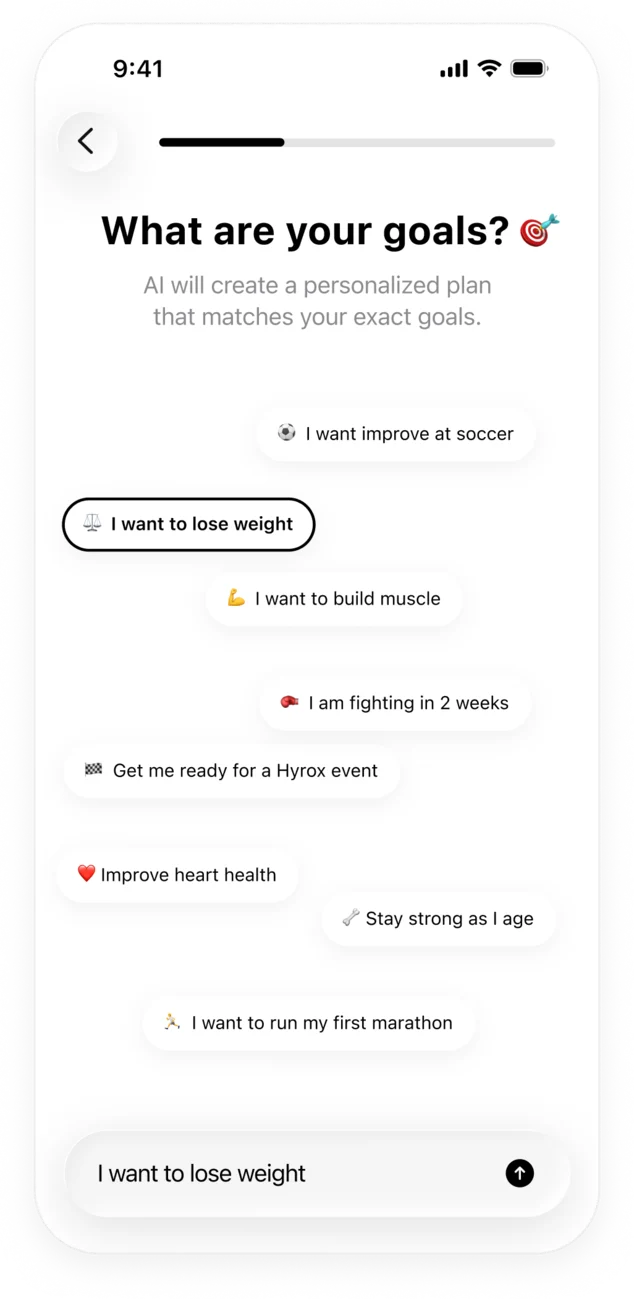
How the plan is built around it
From those answers Trika writes a multi-week program in phases, with daily calorie and macro targets alongside it. The injury is not a tag on the side of the plan; it is one of the inputs the plan is written from, like your training days or your equipment.
In practice that means the sessions avoid what you said to avoid, and lean on what you said was fine. A runner with a knee that cannot take impact keeps the aerobic work but gets it on a bike or a rower. A lifter with a shoulder that cannot go overhead keeps pressing in the planes that are fine and keeps all the pulling.
Because nutrition comes from the same plan, the meals follow the sessions you actually have, not the ones you would have had without the injury. A week with less running is fed like a week with less running. If you want more on that, read how Trika matches meals to your workout schedule.
When something starts hurting mid-block
Plans are written in advance. Bodies are not. The useful question is what happens on the Tuesday when your knee starts complaining halfway through a block that was going well.
You have three options, from smallest to largest.
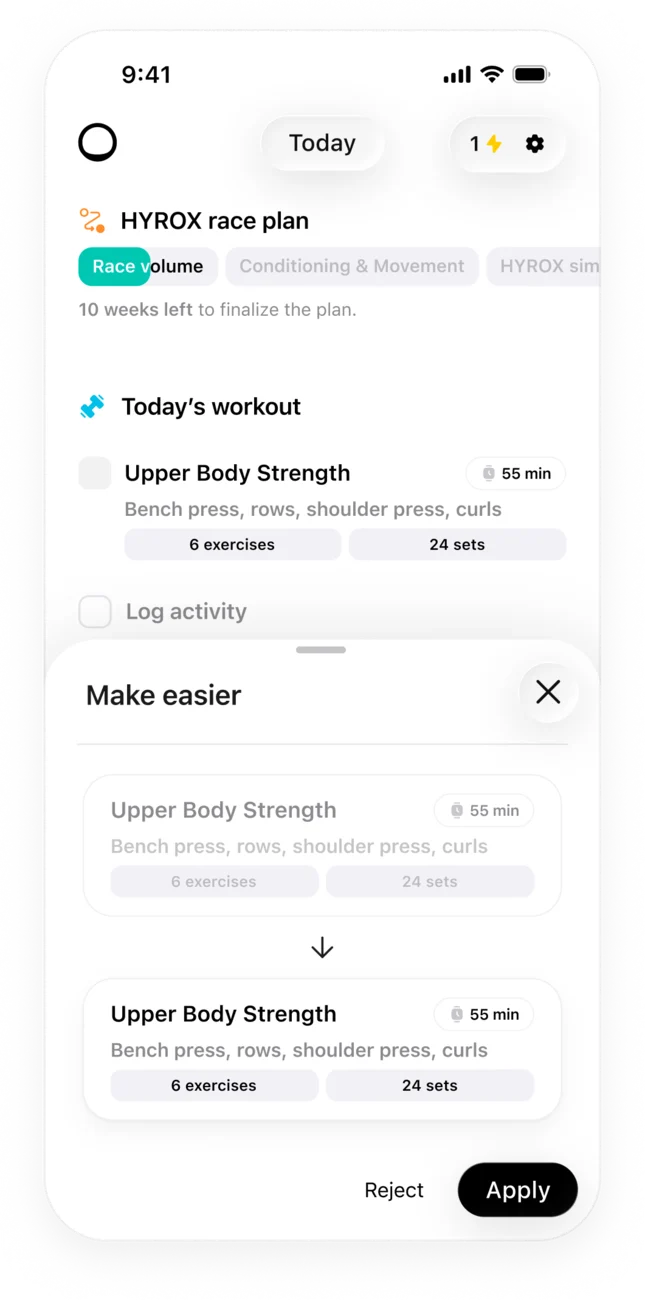
Make today easier. On any session you can ask for an easier version, shorten it, swap it for another workout, or move it to another day. Trika shows the changed version side by side with the original, and you accept or reject it. Nothing changes until you accept. During a guided workout you can also adjust the load as you go.
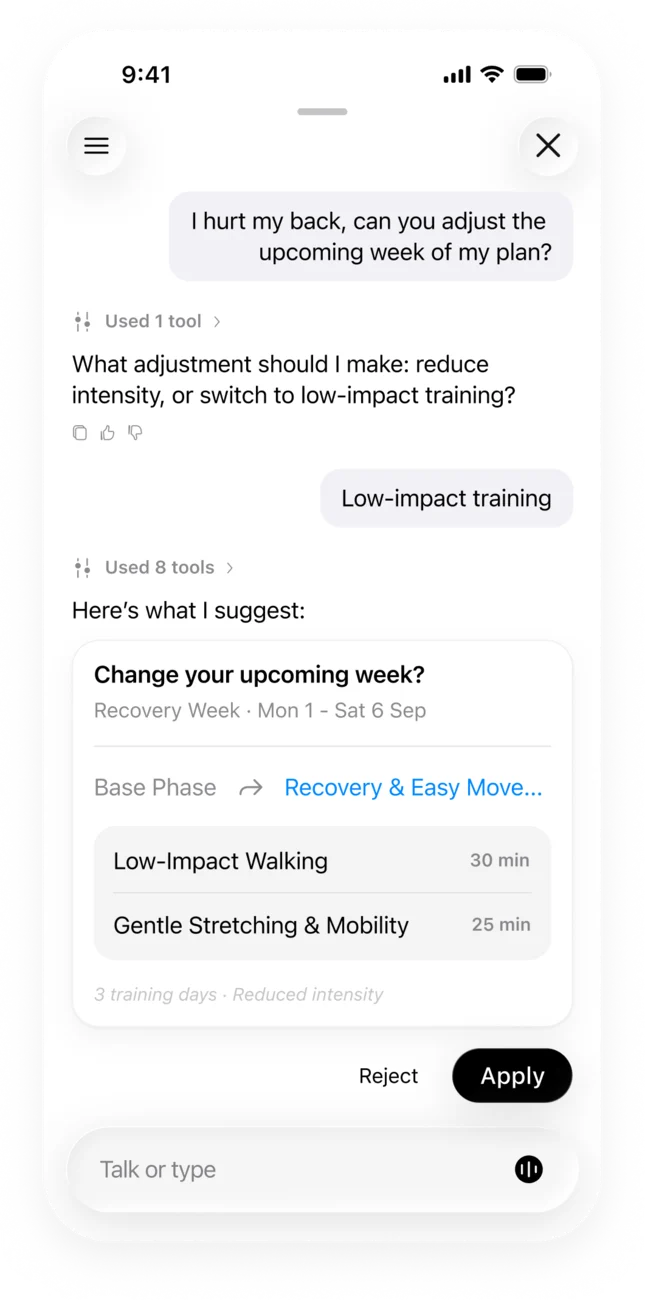
Tell the coach. For anything that lasts longer than a day, talk to the coach in plain words: “my knee hurts when I run, I want to keep training but no impact for two weeks”. The coach knows your plan and edits it itself. It can re-plan the week around the injury, and because the meals are built from the sessions, the edited week comes with meals that match it.
Change your profile. If the limitation is going to stay for the rest of the block, update it in your profile so every future phase is written with it in mind, not just this week.
The coach remembers what you tell it. Under “What the coach remembers” in Settings you can see what it knows about you, including injuries, and make it forget anything that no longer applies. That matters on the way back: when the knee is fine again, tell the coach, remove the limitation, and the plan opens back up.
Seeing the change before it happens
The side-by-side view is the part that makes this usable. Every change, whether you asked for an easier day or the coach re-planned the week, is shown against the original before you accept it. You can read what moved, what got lighter and what was swapped, and reject it if it is not what you meant.
That is deliberate. An app that silently rewrites your week around a limitation you mentioned once is hard to trust. An app that shows you the rewrite and waits is easier to argue with.
What Trika does not do
Trika is a training and nutrition planner. It is not a physio and it is not a rehab program.
- It does not diagnose. It takes “my knee hurts” at face value and works around it. It cannot tell you why it hurts.
- It does not prescribe rehab exercises for a condition. There is no back-pain protocol or post-surgery program. If you need one, a physio or a dedicated rehab app is the right tool, and you can give Trika the limits they set.
- It does not decide what is safe. You and your doctor or physio decide what you can do. Trika plans inside those limits.
If you are weighing Trika against apps built for pain or rehab, read how Trika compares with Fitbod, Kaia and Sworkit for injury-friendly workout plans. Several of them are the better pick for specific situations, and that article says which.
A short checklist
- At setup, list each injury with where it is, what it rules out and what is still fine.
- Give Trika your real training days and equipment for the weeks ahead, not the ideal ones.
- On a bad day, ask for an easier session, shorten it or swap it, and read the side-by-side before accepting.
- For anything longer than a day, tell the coach and let it re-plan the week.
- When you recover, tell the coach and clear the limitation under “What the coach remembers”.
Trika is free to download, with a subscription for the full plan. If you want to see how a plan is built from your goal in the first place, start with a personalized workout and meal plan from your goal.
Questions people ask
How can Trika AI Fitness help me modify workouts for my knee injury?
Tell Trika about the knee when you set up your goal, or tell the coach when it starts hurting. Trika: Workout & Meal Planner builds the plan around the injuries you list, and the coach can re-plan the week around a sore knee. On any given day you can also ask for an easier session or swap the workout, and Trika shows the changed version next to the original before you accept it. What you are allowed to do with the knee is a decision for your doctor or physio; Trika works inside the limits you give it.
Need a workout app that can modify exercises based on my injury or mobility issues
Trika takes injuries and limitations as part of your profile, together with your goal, training days, time and equipment, and writes the training and nutrition plan around them. When a limitation changes, you tell the coach and it edits the plan itself. Trika is not a rehab program: it does not prescribe exercises for a condition or tell you what you can safely do.
I struggle with shoulder pain, need an app that adjusts workouts for that
Add the shoulder to your profile, or tell the coach in plain words: "my right shoulder hurts when I press overhead". Trika re-plans the week around it and remembers what you said, so later sessions respect it too. If the pain is new or getting worse, see a physio first and give Trika the limits they set.
Get Trika
Free to download. Trika Pro unlocks the full plan.